Teams vs. SharePoint: The Governance Mistake Most Organizations Are Still Making
Preview
In this blog, we'll explore:
The hidden governance challenges created by treating Teams and SharePoint as separate services
How fragmented ownership and lifecycle models impact collaboration and compliance
Why governing the Microsoft 365 workspace, not individual products, leads to better AI readiness and control
One of the biggest governance challenges I still see in Microsoft 365 is not really about AI, Copilot, retention labels, or security settings.
It's much simpler than that.
During Microsoft 365 governance projects, I frequently encounter organizations that continue to govern Teams and SharePoint as separate services, even though they are often connected through the same Microsoft 365 Group. Often, they have different owners, different provisioning paths, different lifecycle rules, different committees, and different policies.
The problem?
In most situations, they’re actually governing the same thing.
The Microsoft 365 reality
That distinction matters because users experience Microsoft 365 through apps, but governance operates across the connected workspace behind those apps.
When someone creates a Microsoft Team, Microsoft doesn't simply create a collaboration workspace inside Teams.
Behind the scenes, Microsoft creates:
A Microsoft 365 Group
A SharePoint site
An Exchange mailbox and Calendar
A Planner workspace
When applicable, additional connected Microsoft 365 services
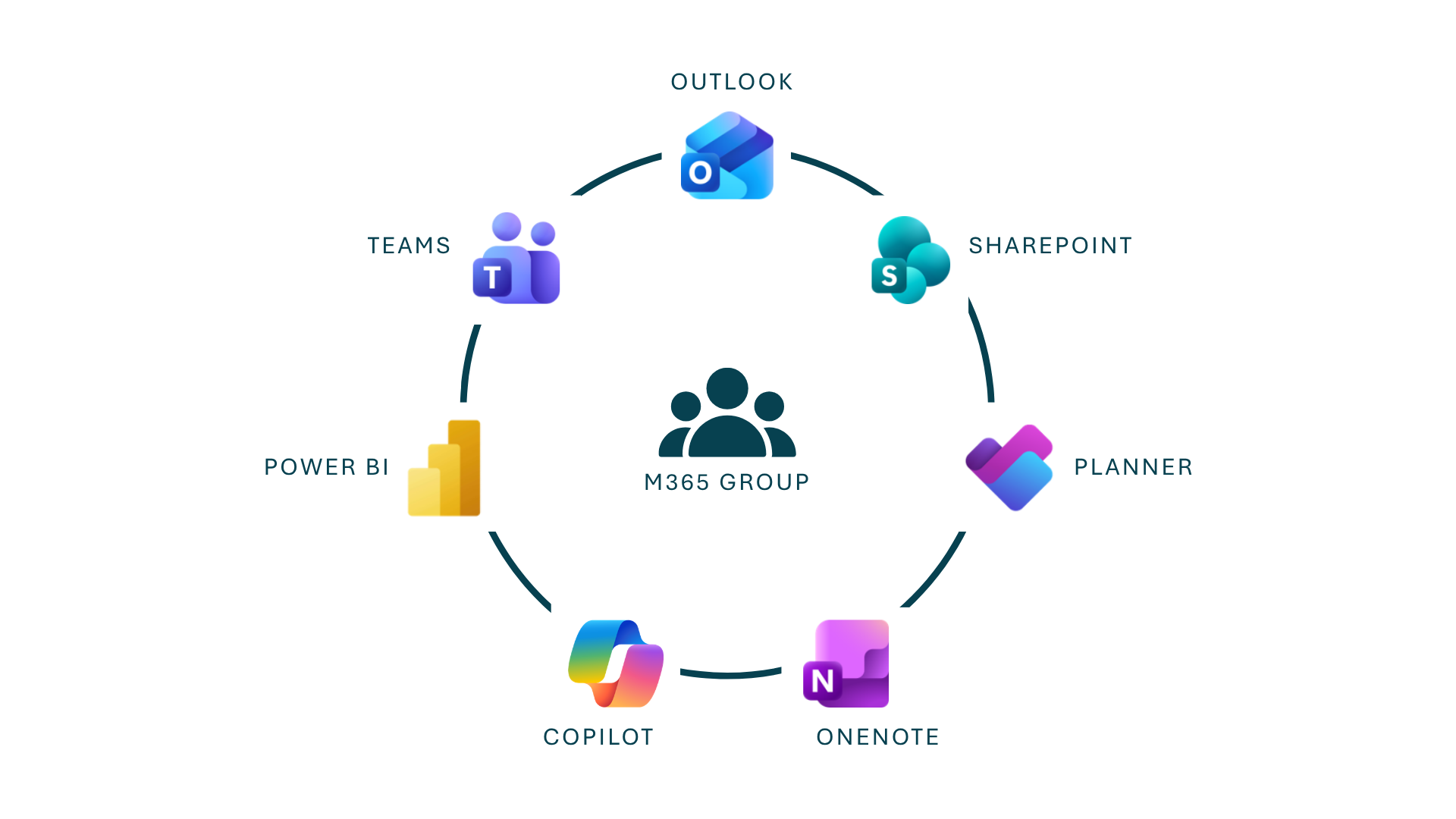
The Team is one experience layered on top of those services. The SharePoint site is not separate from it; it is part of the same workspace.
Yet many organizations I see are still operating with governance models inherited from the days when SharePoint and the other services were managed separately. Each Microsoft 365 product often gets treated as its own technology, with its own application model, operating model, governance process, and ownership team.
A SharePoint site has one governance process. A Team has another. Exchange has yet another.
This creates confusion almost immediately for everyone involved.
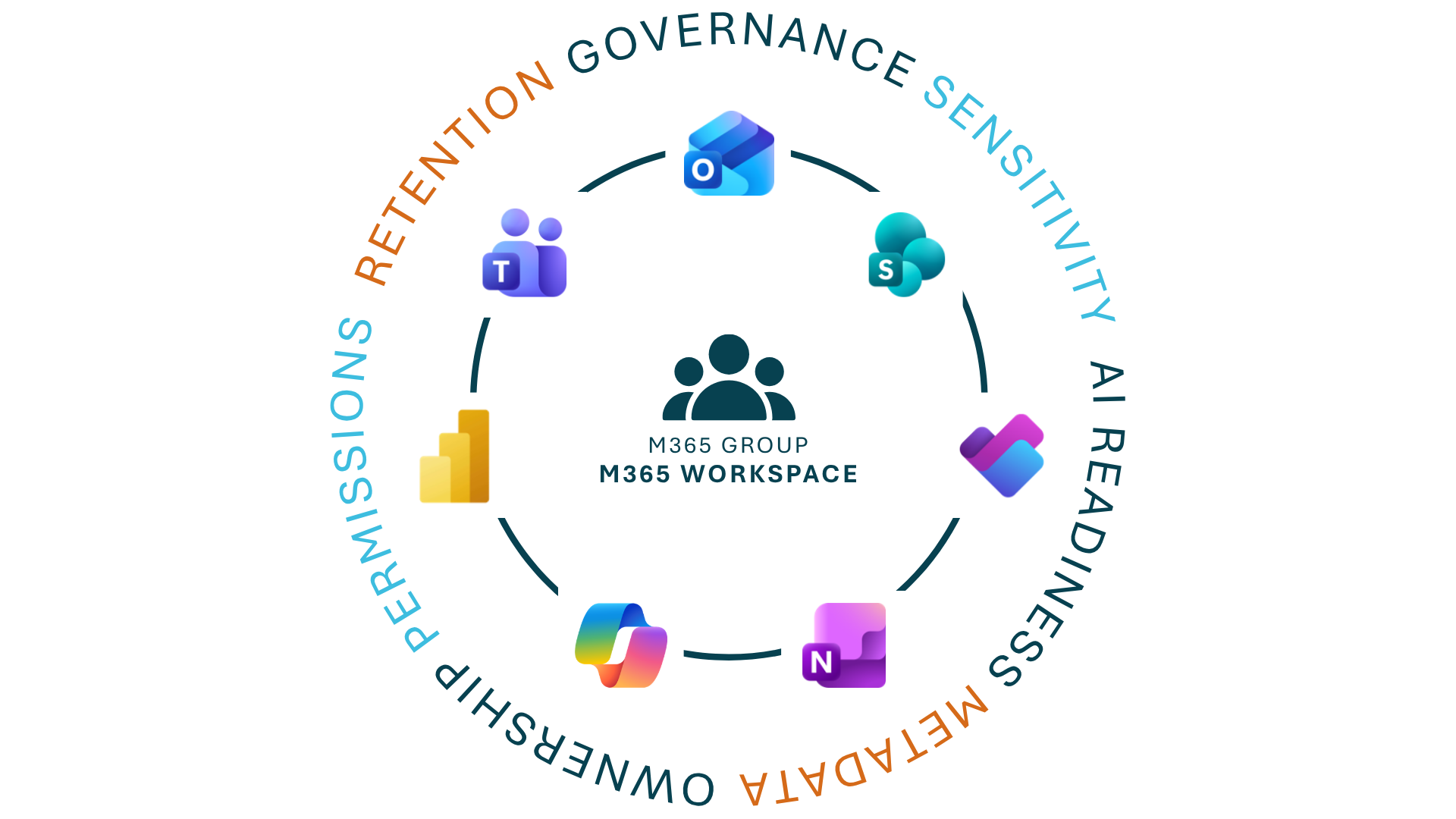
Image above: Govern the workspace, not the products.
The ownership problem
Across governance and Microsoft 365 modernization projects I’ve participated in, ownership is one of the most common areas of confusion.
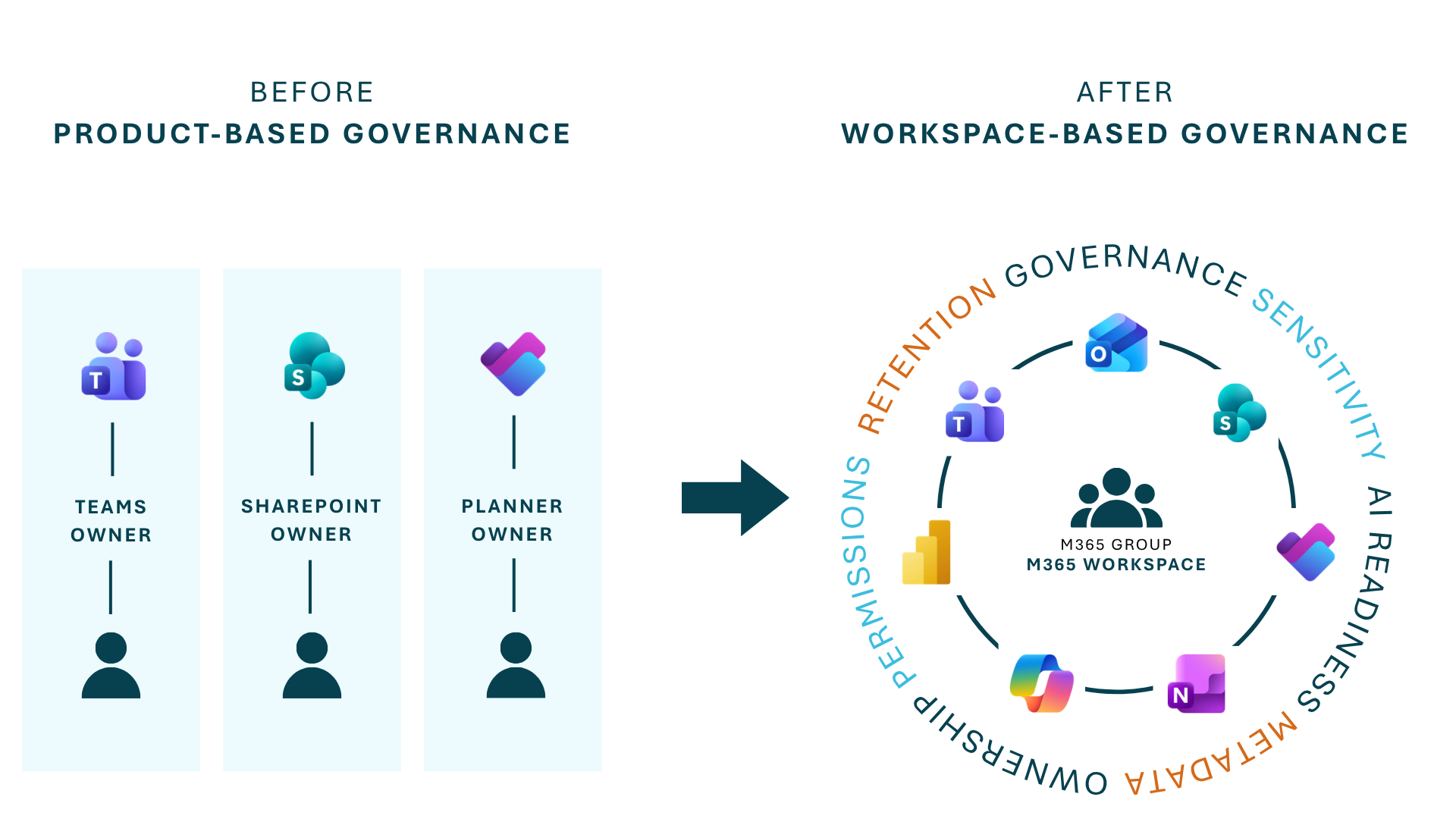
Image above: Moving from product governance to workspace governance.
I've worked with organizations where:
SharePoint sites have designated site owners
Teams have Team owners
Microsoft 365 Groups have group owners
On paper, these sound like different roles. In reality, they are often responsible for the exact same workspace. As a result:
Nobody knows who is actually accountable
Ownership becomes inconsistent
Lifecycle decisions are delayed
Permissions are rarely reviewed or understood
Content quality deteriorates over time
Organizations often don't have an ownership problem. They have an ownership model problem.
The lifecycle problem
The second issue is lifecycle management…
A Team might be governed under a collaboration policy. The connected SharePoint site might be governed under a document management policy. The Microsoft 365 Group might have entirely different rules.
Eventually people start asking questions like:
Can this Team be deleted?
What happens to the SharePoint content?
Who approves archival?
Who reviews access?
Which retention requirements apply?
The answer should be straightforward, but when governance is fragmented, it rarely is.
The AI readiness problem
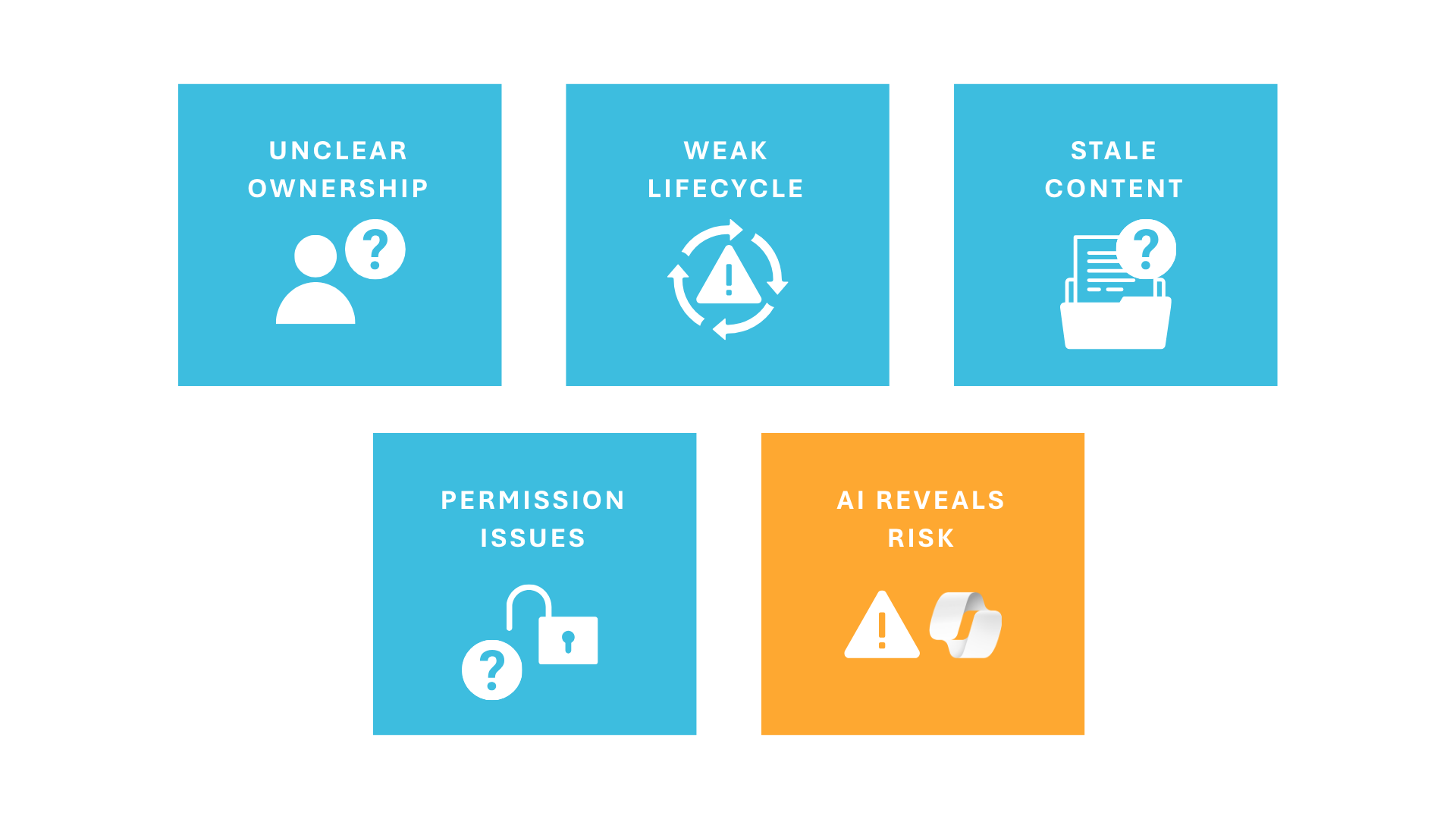
Image above: Copilot does not create the governance problem—it exposes it!
This challenge becomes even more visible with Copilot and AI. Copilot doesn't care whether someone thinks they're working in Teams or SharePoint. It cares about:
Permissions
Content quality
Ownership
Labels
Metadata
Lifecycle controls
If a Team contains poorly governed content, the associated SharePoint site contains poorly governed content too. If ownership is unclear, AI readiness suffers. When permissions are inaccurate, Copilot does not create the governance problem. It makes the problem easier to find, easier to expose, and harder to ignore.
As I often say: Poor information governance becomes AI risk.
Stop governing products—start governing workspaces
I believe governance conversations need to move beyond product-specific thinking. Instead of asking:
How do we govern Teams?
How do we govern SharePoint?
Organizations should be asking:
How do we govern Microsoft 365 workspaces?
How do we manage ownership?
How do we manage lifecycle?
How do we manage permissions?
How do we manage information quality?
Those questions apply regardless of whether users spend their day in Teams, SharePoint, Outlook, or Copilot.
A better approach is to define the workspace first, then apply consistent rules to the connected services inside it. For example: One accountable business owner, one lifecycle status, one access review process, one retention approach, and one clear decision path for archival or deletion.
Toward integrated governance
This is one of the reasons I believe governance disciplines are beginning to converge. They're increasingly managing the same information ecosystem from different perspectives.
Collaboration governance
Information governance
Records management
Security
Privacy
AI governance
The future should not be separate governance programs for every Microsoft 365 service. It should be integrated governance. A model that governs information, ownership, lifecycle, access, compliance, and AI readiness consistently across the entire digital workplace.
Because in Microsoft 365, users may see Teams and SharePoint as different products. Governance should see the workspace behind them, and manage ownership, access, lifecycle, content quality, and AI readiness as one connected system.
What’s next?
A workspace-first approach can help organizations strengthen information governance, reduce AI risk, and build a stronger foundation for Copilot adoption.
Need help evaluating your Microsoft 365 governance model? Talk to a Microsoft 365 Specialist!